Sunday, 23 August 2020

Harvest of Hope

When the fear of Covid19 still has a tight grip over the entire world a new fear of collapsing economies is ready to strangle the neck, especially of the developing nations. Any proper assessment of the actual effects of this pandemic on the global economy is yet to come. But one thing is sure that it has hit-hard already-slowing Indian economy. Financial experts say that this crisis will leave a permanent scar on India's growth story. According to Mumbai based credit rating agency CRISIL a huge contract will be in GDP numbers for 2020-21 and to catch-up a surge of 11%  would be required for the next three fiscals; which is quite unprecedented and less likely to happen in the case of India.

Among the many negative impacts of the greatest lockdown happened in India in the end of March 2020 the biggest ones are the erosion in job-base and consumer spending. The household spending which has been shifted to subsistence (survival) level during lockdown will remain cautious and timid under threat of a second wave of virus followed by another lockdown. Indian consumers will likely to save their resources for survival for the case of any recurrence.

For a country like India where major parts of demand and investment both come from domestic spendings and savings respectively. A revival in consumption is much needed, as Biocon chairperson Kiran Mazumdar Shaw  said, "Demand is going to play a very big part in economic revival, and if we cannot kick-start demand I fear then we cannot have economic revival.”

To rebound the economy a lot of emphasis is being paid for revival of the manufacturing and service sector by liquidity infusion and easy credit access. But the question rises that unless there is a revival of demand who will they sell their goods to? In this toughest time can Agriculture emerge as a saviour?  

Indian Agriculture sector which still accommodates more than 50% of the population and largest labour force of 145 million is also the least hit sector during worldwide spread of Covid 19. Many farm produce counted as essential goods the agriculture sector had exemptions to sell their produce even in the complete lockdown. 

Due to PM Kisan Sammam Nidhi and KCC loan, farmers reported that there has been a negligible impact on household consumption during lockdown. At the same time rabi production of 2020 especially wheat yields was record high. The Civil Supplies Corporation and Marketing Federation of Madhya Pradesh procured 128 lakh tonnes of wheat against 84.89 lakh tonnes yields of last year. The total wheat procurement in the country has touched 386 lakh tonnes as against 368 lakh tonnes of last year. In the process of rewarding the higher yields of farmers of Madhya Pradesh, the State government has infused  liquidity of 21 lakh crores into the market through 14.22 lakh bank accounts of farmers. This fiscal stimulus straight into hands of farmer/farm-labourer has become the fuel to restart the growth story of the country, which had been on halt for 3 months. Negligible tax burden and increased income has raised the purchasing power of farmers which is very necessary for industrial growth. As agriculture supplies the raw material to various agro-based and FMCG companies. A good harvest plays a vital role in both internal and external trade of India. 

Moreover, the forecast of higher production of kharif crops due to good monsoon this year has filled farmers with positive sentiments. And even the top economists believe that demand in a huge and developing economy like India is mostly sentiment driven. Euphoria of good harvest can be the required impetus for positive consumer behaviour. Hence Agriculture can definitely be the silver lining in this darkest hour of Indian economy.

We living in the manufacturing and service driven economy sometimes undermines the facts that India is the largest producer of milk, pulses, and jute, and ranks as the second-largest producer of rice, wheat, sugarcane, groundnut, vegetables, fruit, and cotton. Additionally being the second largest producer India is also the largest exporter of rice and wheat, it can also fulfill the demands of the countries which are dependent on imports for their food security. Decreasing rates of crude oil and increased export of agriculture produce can definitely subsidize  the trade deficit of our country. Especially in the time where many major exporters have withdrawn from the international market to avoid the exposure of Coronavirus.  In this crucial time any small stimulus given to the agriculture sector by the government can re-track the entire economy. The recent forecast by CRISIL shows agriculture will still depict an impressive growth of 5.9% in Q4 of FY20, when GDP may register negative growth.

All the aforementioned facts show that when all the other businesses grapple with losses, the reopening of the economy poses fresh challenges for tackling the second wave of Covid-19. Agriculture is the only bright spot or the harvest of hope for India. 


Thursday, 30 May 2019

Expectation of Indian Economy from Modi 2.0

2019’s general election was special in many ways, after almost 50 years any government came back to power with such majority. In the parliamentarian democracy people voted on the pattern of presidential form of Government. Once again we have proved that in India, election and good economy has no connection. Although rural distress, unemployment, lack of infrastructure, slow growth have always been the talk of the town before and after the election. But in the elections voting outcomes always be different then it is perceived, on the basis of the economic success of previous Government. Narshingma Rao and Atal Bihari are two best examples. People of India voted out the Government who was responsible for historic 1991’s economic reforms. Similarly people also voted out Late Atal Bihari’s Government which has many credits of economic success on its name.


Perhaps this is the reason both the Government and opposition parties kept all economic worries aside. People also forgot rising rate of unemployment, muted earnings, undercapitalized NBFC’s with poor credit disbursement and covering up of real issues with dubious statistics. The country has suffered after effect of demonetization and teething effect of GST for almost  2 years but all these issues could not become the hot topics of discussion of election campaign. India voted on emotional, religious and security related issues, yet we all know the importanc of a good economic health for any country like India. Modi’s come-back reverberated with his old slogan of 2104 “sabka saath, sabka vikas” which can be translated as ‘inclusion of all, in economic progress’.


In case of India many times macroeconomic indicators do not reflect the ground reality for every state or some region or a group of people. Therefore rather than discussing the key fundamental of macroeconomics which hardly relates to a common man, we are discussing easily relatable micros. All a common man wants is a good job or a profitable business, proper infrastructure, cheap credits and safe investment avenues. No matter what the GDP numbers are saying he just want to feel secure about his own business and not about fiscal deficit of the country.

So in corollary the expectations from this Modi Government is also very basic. To provide with good earning opportunities in jobs or in business Government should start from they left, but this time with more thrust. Some extra attention is required to improve the business climate of India so it can attract investors who are looking for new avenues amidst of US, China trade war. Although India had improved a lot in ‘ease of doing business’ in Modi’s last term, India jumped to 77th rank from 131. But internal shocks of demonetization, complex GST and high interest rate averse the investors. This economic upheaval also slowed internal demand and sluggish growth which turns into job-loss and investment aversion from inside of the country. We must not belittle domestic investment as 80% of investment comes from domestic investors. As the dust of demonetization has settled now a simplified GST in pipeline and a moderate interest rate regime will do some help in coming years. Although frequent change in tax structure generally create disruption in market and its adaptation takes time. Eventually this time Government has to be extra cautious about simplification. Hopefully the new Direct Tax Code also add some more euphoria to the market and raise demand if good exemptions given under it.

A good banking system is like engine of growth for a country. Moving ahead with idea of recapitalization of banks and privatization of loss making and non strategic public sector bank can proved to be a great stimulus to economy. Easy and cheap credits can compensate the loss of growing unemployment in the country. Being it PM Modi’s own idea for which he also brought Mudra Loan scheme, he may put special emphasis on the idea this time.

Major reforms in agriculture sector is expected by all analyst as doubling farm income is priority on Modi’s agenda. Hopefully this Government will be more focused on agri-business by providing better access to technology, awareness of schemes and good Infrastructure to increase shelf life of produce. A restructuring in APMC act is also expected to make direct market more functional in agriculture. On-spot value addition to the agricultural produce can be a revolutionary idea for Indian farm business. It can empower farmer more than any other subsidy can do. There is also a urgent need of increasing per hectare productivity because increasing MSP is not a permanent solution. So cheap procurement of better seeds and better irrigation facility should be the top priority of Government.

One thing that is commonly accepted by all Indian after seeing Modi’s five year in centre that he is capable of doing what he determines to, Swachh Bharat is a live example. Although this Government will not have too much room in fiscal deficit for increasing public expenditure but there is lot of space for disinvestment in non-strategic PSUs. Modi may face some fiscal constraints but he has a good intent and also lot of support both from inside and outside of parliament. Conclusively Modi’s 2nd term can be historic for India’s progress.

Tuesday, 20 June 2017

WAVES OF loan WAIVER

Cascading effect of farm loan waiver is considered one of the most hazardous appeasement in present economic scenario.
This year after the huge victory, Yogi's UP govt waied off 36000cr farm loan. Maharashtra is lining up for 35000 cr waiver apart from that Devendra fandavis is also planing to give 10000 rs for every farmer has 5 acer or less land holding which will cost around 6000 cr rupees. Madhya Pradesh govt is intend to follow the same trend. 
Center is planning to give interest subsidy worth 20000cr.
All of these adds up to 97000 cr rupees.
If this trends continues and all states waive farm loans it will be around 2.75 lakh crore rupees 2% of India GDP.


The World Bank reports says 'Loan waiver scheme had no effect on productivity, wages or consumption. It led to an increase in default among borrowers that were previously in good standing.'
ICRIER says 'Generalized debt relief, discourages prompt repayment with expectation of more such waiver'.


But for the matter of fact no such voice is being heard about corporate loan waiver no group of intellectuals or economists shown concerns over the corporate loan waiver issue
Total write offs of corporate loan bet 2012 to 2016 is 2.25 lakh crore according to RBI in TOI approximately equal to farm loan waiver for 4 years. Estimated future corporate debt write off as per the report of India Rating Report 2016 is rupees 4 lakh cr debt by 85 companies.


Total corporate loans is 28  lakh crore rupees viz a viz total farm loan is 12.6 Lakh crore but percentage of stressed farm loan is 17% which is around 2 lakh cr rupees relative to stressed corporate loan which is also a close fig of 18% around 5 lakh cr rupees. But their is always a brouhaha about the deficit cause by farm lan waiver. Are the farmers in any which way some less productive businessman of the country? Or the agriculture is something this country doesn't care about and can be replaced easily? If not, then why economists worldwide raise eyebrows on any such decision?

Monday, 12 June 2017

खेती.....यज्ञ या व्यापर?

जिस प्रकार पूर्व काल में ऋषि-मुनि अपनी भौतिक सुख सुविधाएं त्याग कर शहर से दूर और प्रकृति के निकट रह कर अपनी प्रिय वस्तुओ का हवन करते थे ताकि दूसरी प्रजा सुखी रहे, वर्षा अच्छी हो परिणाम स्वरुप फसल अच्छी हो, राज्य संपन्न हो, प्राकृतिक आपदाएं टले। कई यग्यो में कर्ता के प्राणों की भी आहुति देने की बात पढ़ने को मिलती है। क्या हम किसान आत्महत्या का महिमामंडन करने के लिए उसे इस ही तरह की आहुति मान सकते है? तब तो हमे किसान को भी ऋषि मानना पड़ेगा पौराणिक काल में ऋषियों का जो आदर था वो भी किसानों को देना पड़ेगा। कई उदाहरण है शास्त्रो में जो बताते है कि समय-समय पर राजा नंगे पांव ऋषियो के दर्शन करने जाते थे जिसका एक प्रयोजन यह भी होता था कि उन् की सारी जरूरतो का ध्यान रखा जाये और अगर कोई कमी है तो बिना मांगे उपलब्ध करवाई जाए ताकि समाज के अन्नदाता को किसी के सामने हाथ ना फ़ैलाने पड़े। पर अब परिस्थिति परिणत है। परंतु अब परस्पर हाथ फ़ैलाने का रिश्ता है   शासक और कृषक के बीच, पांच साल में एक बार शासक इनके सामने और बाकि  पांच साल किसान, शासक के सामने।


पर अगर खेती व्यापार है तो दृष्टिकोण बदल जायेगा। फिर तो किसान को एक असफल व्यापारी माना जायेगा जो की खुद तो पूरे देश को खिलाता है पर खुद कुपोषित है, जो खुद तो देश की अर्थ व्यवस्था मूल है पर खुद की आर्थिक स्थिति दयनीय है, जिसके घर अच्छी पैदावार का लाभ पूरा देश उठाता है  सिवाए खुद के। कमी कंहा है, गलती में कौन है सरकार या किसान। अगर किसानों के हितों की रक्षा सरकार का उत्तरदायित्व है तो ये याद दिलाने के लिए आजादी के 70 सालो बाद किसानों को उग्र आंदोलन करने के जरूरत क्यों पड रही है क्या पिछले 7 दशकों से हम एक विफल राज्य में रह रहे है जिसमें सरकारे अपनी 60 फिसदी आबादी को दो वक़्त की रोटी और मूलभूत सुविधाऐ भी मुहैया नहीं करवा पाई।

यदि इस मुक्त बाजार प्रणाली में किसानों को अपने हित खुद सुरक्षित रखना है तो क्यों सरकार जब फल, सब्जी या खाद्यान महंगे होने लगते है तो कुछ वर्ग विशेष के तुष्टिकरण के लिए निर्यात कर दाम कम रखने में लग जाती है।  क्या सरकारी हस्तक्षेप सिर्फ शहरी गरीब और मध्यमवर्ग को लाभ पहुँचाने के लिए है।

साल दर साल किसानों की जोत छोटी और कर्ज बड़ा होता जा रहा है। छोटी जोत में ज्यादा पैदावार देने वाली फसले जैसे की प्याज, टमाटर,आलू एकदम से प्रचलित होते जा रही है और परिणाम स्वरुप इनके भाव कम से भी कम। बुद्धिजीवियों द्वारा इस कुचक्र से निकलने का एक मात्र उपाय सुझाया गया है कि जमीनी तौर पर मूल्य संवर्धन इकाईया लगायी जाये जिससे किसान खुद अपने उत्पाद को प्रसंस्करण कर उचित लाभ कमा सके और साथ ही साथ मौसमी बेरोजगारी से भी निजाद पा सके।

अब सरकार को ये निश्चित करना है कि खेती को व्यापार मान कर किसानों को अपना मुनाफा कमाने में स्वसामर्थ करना है या यज्ञ मान किसानों को अपने प्राणो की आहुति देने के लिए छोड़ देना है?

Thursday, 27 April 2017

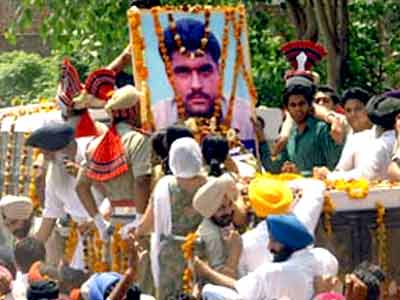
Will Kulbhushan be Next Sarabjit?

Kulbhushan Jadav an indian citizen who took premature retirement from navy and doing his business in Iran, was abducted and taken to Pakistan and their tried by military court which awarded him the death sentence. Indian Government reacted with rightful indignation and warn Pakistan for dire consequences.

Similarly Sarabjit Singh who was also an Indian national, convicted of terrorism and spying by a Pakistani court. Was tried to bring back home by the UPA government but failed, despite a high decibel campaign for his release.
While in prison at Kot Lakhpat Jail, Lahore on this very day in April 2013, he was attacked by fellow inmates and died six days later on 2nd may, at the Jinnah Hospital, Lahore. We also could never bring back our 53 POW of Bangladesh Liberation war of 1971. So India has very bad track record of bringing back it's people from foreign soil.


Where Pakistan has declared Kulbhusan their enemy number one on international platforms and awarded the capital punishment to boast this as a strategic achievement will it be possible for India to get it done through diplomatic devices with the pseudo democratic and insidious state of Pakistan, certainly doubtful. But our government's stand of going out of its way to save kulbhushan is being correlated with strong personality of our present P.M. and the government with full majority. So now whole event is a litmus test of Mr. Modi's strong personality and diplomacy will it work now? After spending so much energy and resources on his foreign tours to get a strong hold on world politics, will it bring some fruit now? It is remains to be seen that how this suspense of "out of the way" will end.


On the death anniversary of Sarabjit we need to interospect the progress of India under Modi government relative to India of 2013 and before, did we gain some more relative political capacity, globally? Did we realize our potential as a strong country with not to be mess around to our neighbors like China and Pakistan? Or we just participating in fray of becoming a self proclaimed superpower or vishwaguru in our words? 

Saturday, 1 April 2017

State Of Agriculture

There is lots of brouhaha of Farm loan waiver for marginal and small farmers in Uttar Pardesh. This decision could open a Pandora's box as it can fuel similar demands from many other states but it is government's call to take a prudent decision over this issue. Though there is a consensus among politicians, economists and thinkers of society that until we address these issues of farmers properly there will be no substantial growth in the country. All developed economies were agrarian before they were industrialized, only their period vary. Once democratic system developed, the first thing developed economies of today did was to complete agrarian reforms in time-bound way.  As Land remains the means of livelihood for large section of society in an agrarian economy the successful completion of agrarian reforms benefited the maximum number of people thereby improving their economic condition.

So it is very clear now that development of agriculture and farmers is the foremost prerequisite for development of country but are we sussing out their issue completely and correctly. Because data of land records says that 140 million hectare of land is used as agriculture land and this area is distributed among 138 million farmers. In 2011 there was 93 millions were marginal farmers (holdings of less than one hectare). Since smaller land holdings are either fragmented of large holdings which have been passed on within the family or have been informally leased by a large holder, farmers who cultivate these holdings often do not have a formal lease agreement. Sans of any land records tenant is not eligible for formal credit or other government benefits such as input subsidy or crop insurance schemes and if majority of most needy people are excluded from government's welfare schemes and policies then how it would be "sab ka saath, sab a vikas".


Access to agricultural credit is linked to the holding of land titles. Consequently these tenant farmers who account for more than 28% unable to access institutionalized credits for purchasing inputs,seeds, weeding, harvesting and transporting. As a results these farmers primarily borrow from informal source of credit such as money lenders, shopkeepers, relatives and friends on much higher interest rate. As per the report of the Committee on Medium-term Path on Financial Inclusion,RBI more 60% credit of marginal and small farmers comes from informal source of credit. To overcome this NITI Aayog has  proposed a model land leasing law to provide for the litigation of land leasing. This would ensure that land owners have the security of ownership rights, and land tenets are secure in their tenancy.  Legalization of land tenancy would also ensure that farmers get access to formal credit, insurance and input such as fertilizers but this Model Land Leasing law has been adopted only by Madhya Pradesh Government so far. As agriculture is a state subject it is all up to state governments to implement  this original Model law or to bring it with some modifications or to not pay attention to this issue at all but one thing is very evident that agriculture in this country has to go through some serious changes. Because it will never be viable for any marginal farmer with small land holding to follow conventional farming practices and sustain in farming business. So it s remains to be seen that how India will cope up with this deteriorating issue. Can this country ever move towards Cooperative farming like USSR (erstwhile) or will opt for Corporate farming like America and Canada? While in India land is considered a symbol of social prestige, status and identity unlike other the countries which succeeded in their land reforms programmes where it is seen as just an economic asset for income-earning.


Sunday, 12 March 2017

Indianization/Rationalization of Financial Year

In a row of Modi government's radical reform process a most expected reform to come next is change of financial year from 1st of April to 1st of January. Modi government has taken many bold moves like scrapping of Planning Commission and demonetization and merger of Rail Budget with Common Budget so there is a huge probability that Modi Government will  come up with this kind of revolutionary change when this idea has backing of many elite assemblies of economist, administrator and social thinkers.
Chamberlain Commission (1913),Sir Dinshaw Wacha Commission (1921) under British Government, 1st Administrative Reform Commission (1966), LK Jha Commitee (1984), C.Rangarajan  (2011, Planning Commission) all have favored the idea of changing India Financial Year.


In west countries 25 march is celebrated as Lady Day, on this day angle Gabriel informed Virgin Mary that she would be the mother of Jesus Christ. This date is also close to equinox  so it marked as the division of the fiscal year therefore in west 1st of April was celebrated as new year for psychological and cultural reasons. From 1867 British Raj made first of April new financial year to align India's budgeting system with their budgeting system in England. Indian constitution's article 112 says president will lay annual financial statment before Parliament every financial year but there is no clause which define financial year rather article 370 (1) says to refer general clause act 1897 for interpretation of financial year. Means that can require a constitutional amendment. Where not having majority in Rajya Sabha could be a hurdle in that process.


Recently Modi government had set up a high level commitee headed by Shankar Acharya (former Chief Economic Advisor) to examine feasibility of shifting financial year to January 1st. The committee has submitted its final report to Finance Minister. It has given various merits and demerits of change of financial year and its effect on the different agricultural crop period and its impact on business, taxation system and procedure, statics and data collection. Change of financial year will help to align tax collection and Budget Estimate with actual receipt and expenditure. It will also help to account for impact of monsoon and other socio economic aspects of India for better planning and resource allocation especially for transforming ruler India.


In present budget making process we use last year's monsoon data which is nearly 8 month old so it doesn't give correct projection of next year's tax collection and expenditures. Generally all Multi National Companies maintain their annual reports from 1st January but in India they have to maintain another records from 1st April also in alignment with government financial year so this change would be considered as one more step towards ease of doing business in India. Bibek Debroy member of NITI Aayog has aslo favored following the calender year as financial year. It remains to be seen that with how much conviction Modi Government go on implementation of this idea but one thing is very clear that Modi ji has done every thing to look different than previous Government which was infamous for not taking decision. So if you think that your business will be affected by this change (if it takes place) get yourself ready for next Modi move.